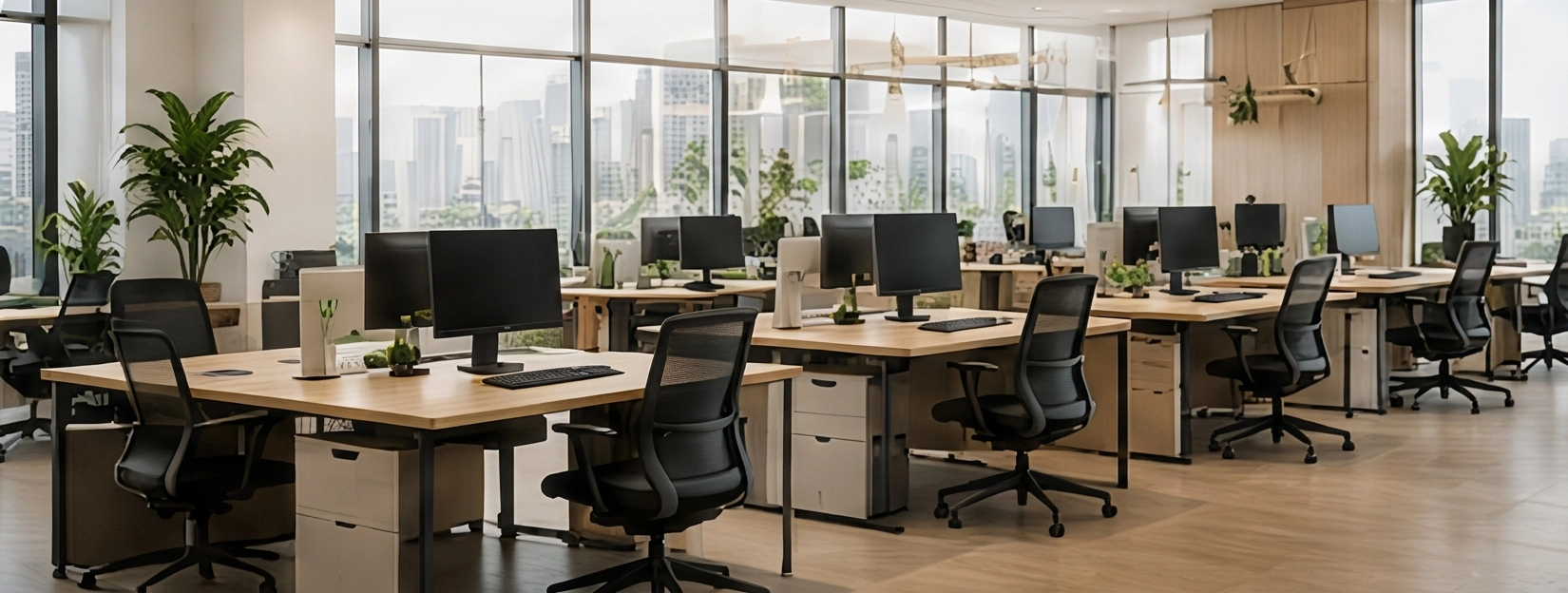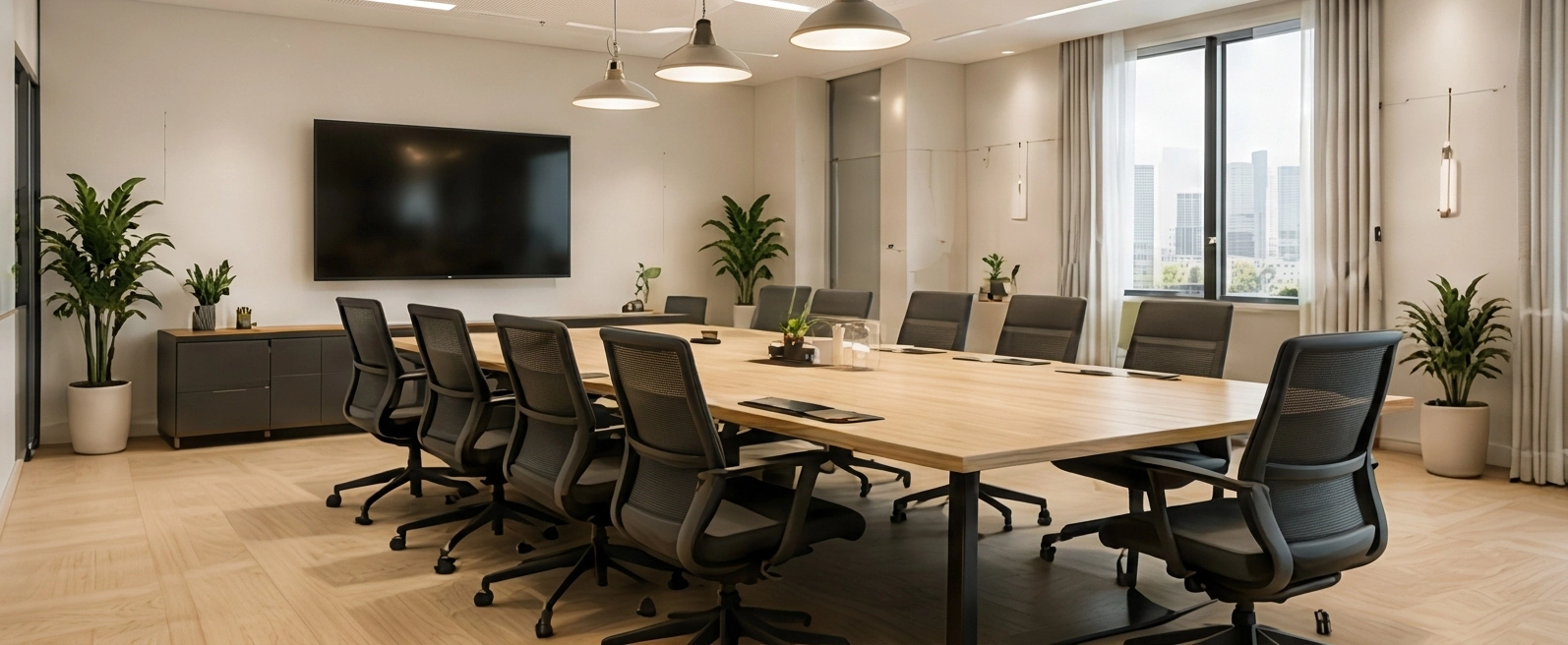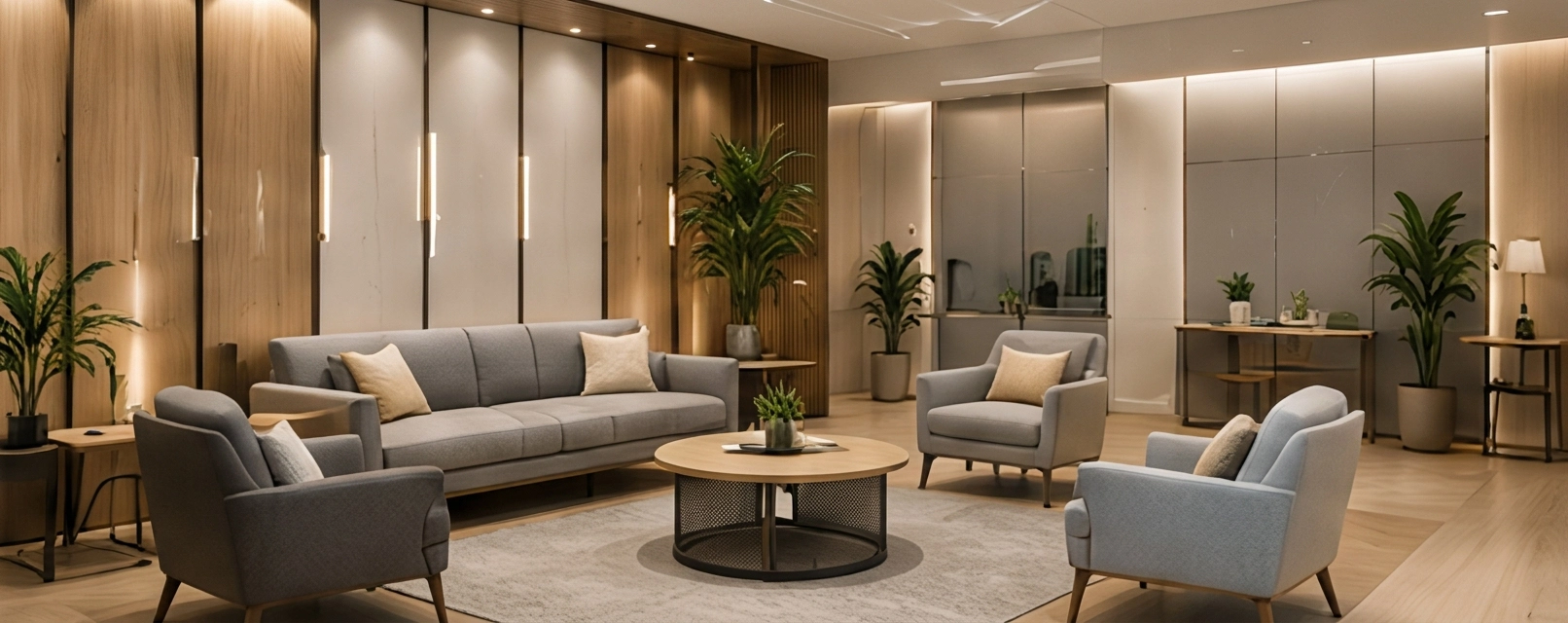
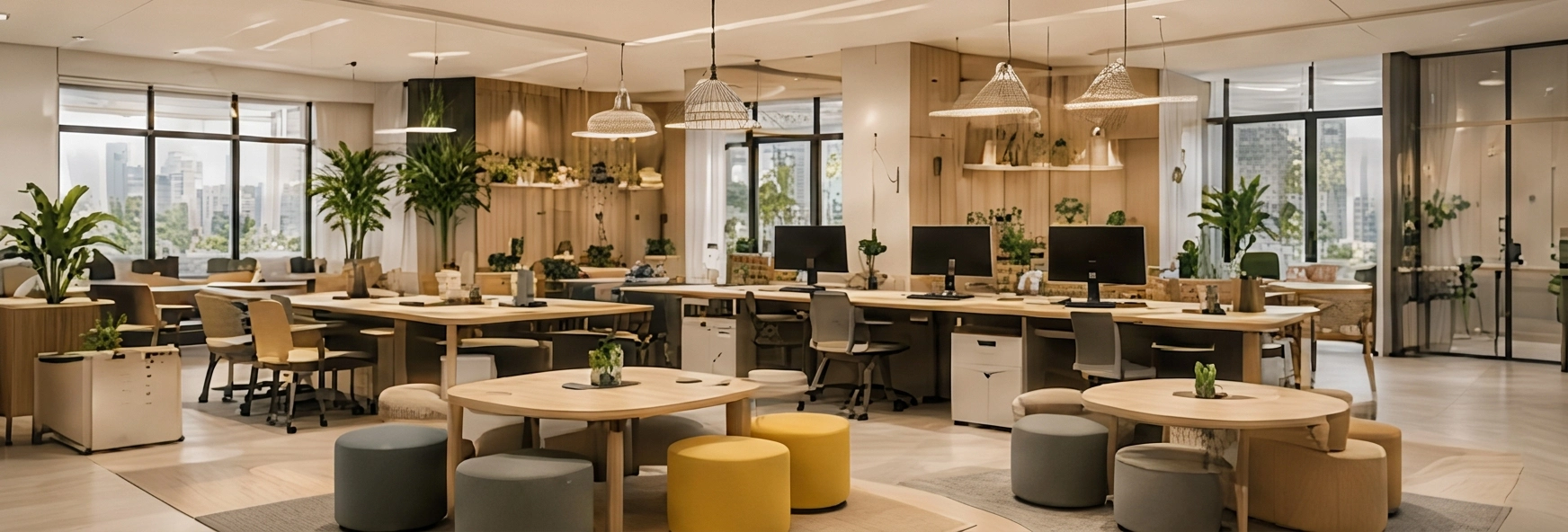
Common spaces can serve a much greater purpose than simply functioning as corridors or unused areas within a building. When thoughtfully designed, they can become places for relaxation, conversation, collaboration, or even informal gatherings.
A key principle in designing common spaces is flexibility. The same space may serve different purposes throughout the day, depending on the needs and activities of its users.
A diverse selection of furniture can help support these different uses. Sofas can provide comfortable areas for relaxation, individual chairs can accommodate focused work, small tables can encourage conversation, while high tables can support informal meetings.
The layout should give users the freedom to choose the space that best suits their activity, rather than imposing a fixed and restrictive way of using the environment.
The overall atmosphere is another important consideration. Natural light, greenery, carefully selected materials, and a considered color palette can make common spaces more inviting while creating a greater sense of comfort and relaxation.
When common spaces are designed with both functionality and user experience in mind, they can become meaningful destinations within an organization—encouraging connection, interaction, and a stronger sense of community among people.