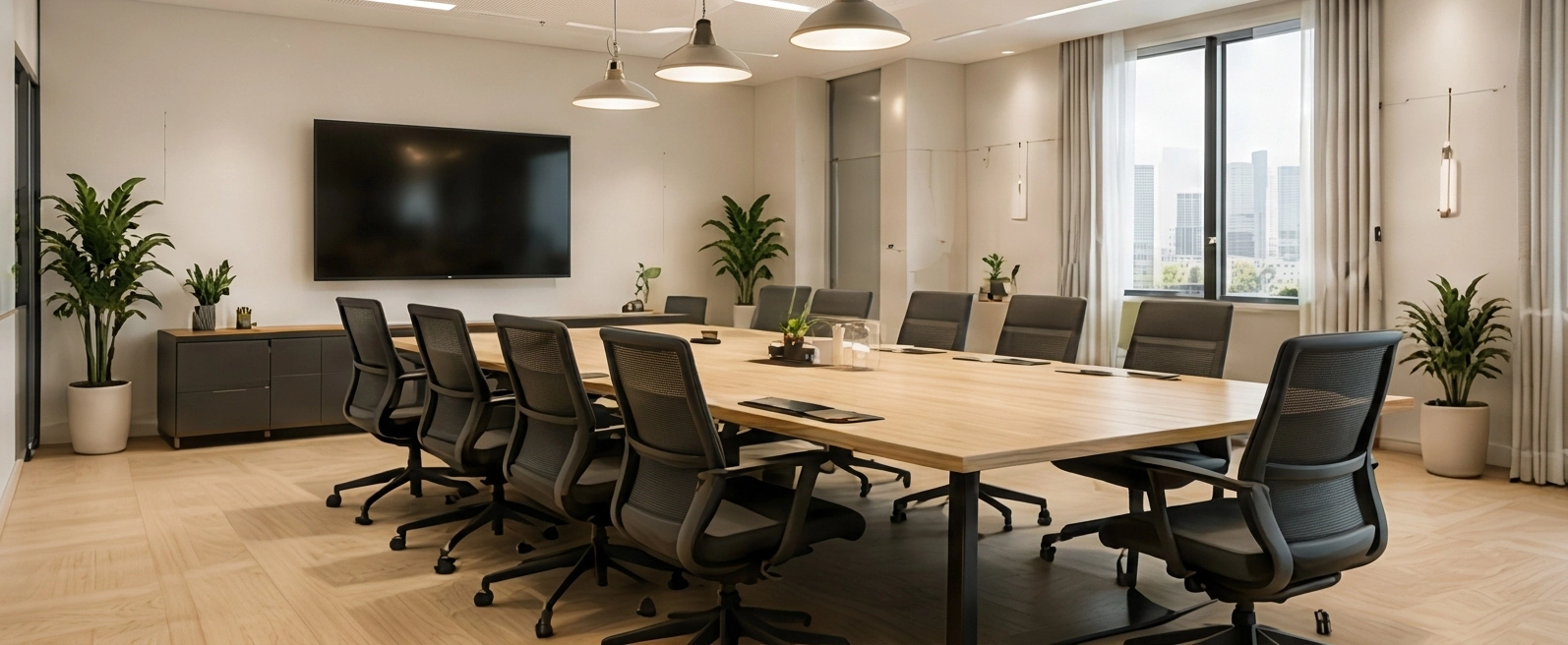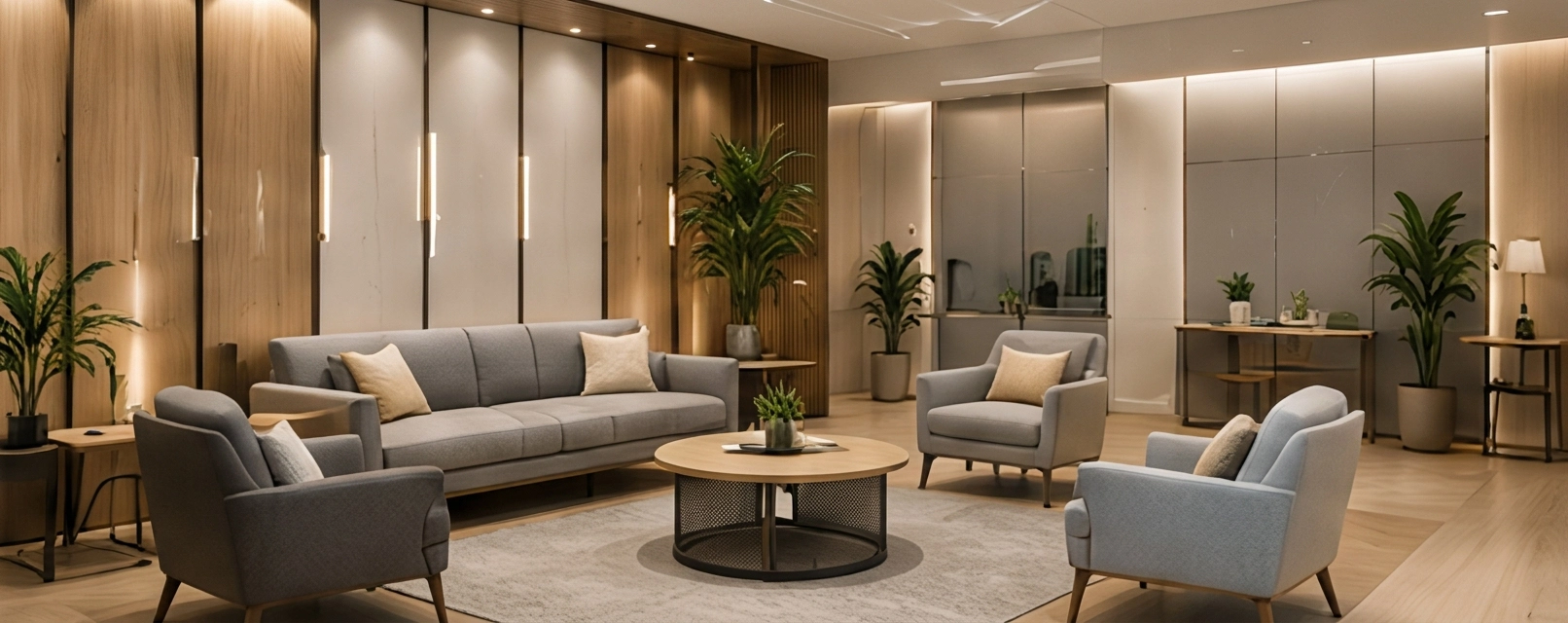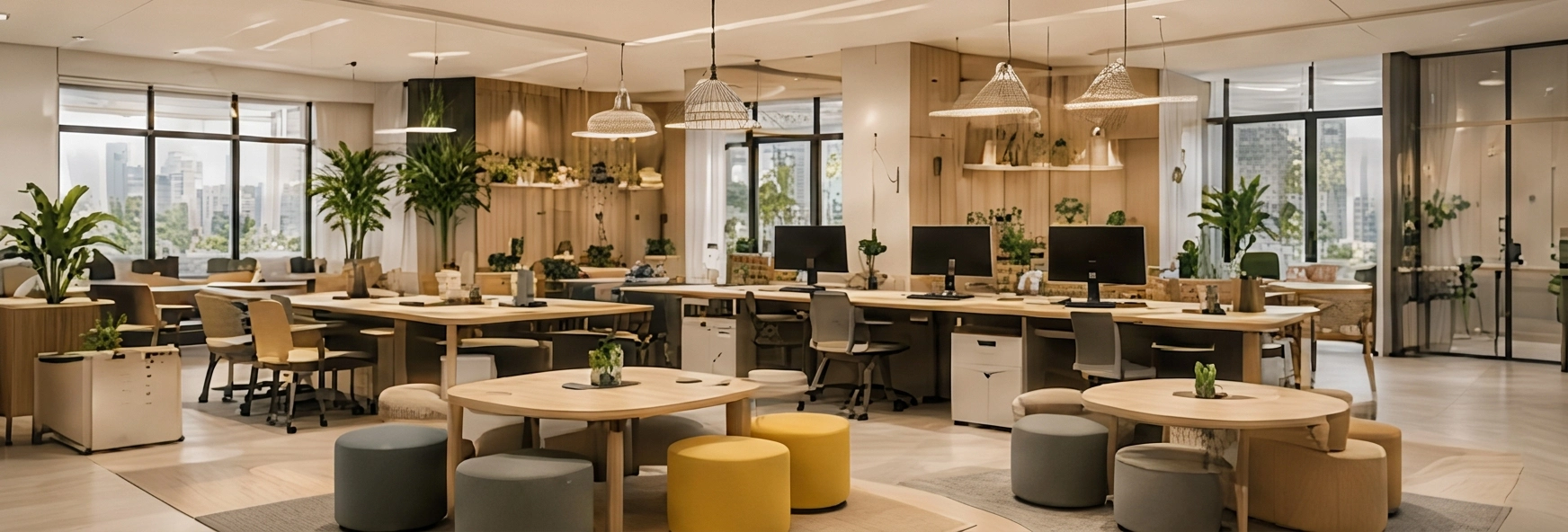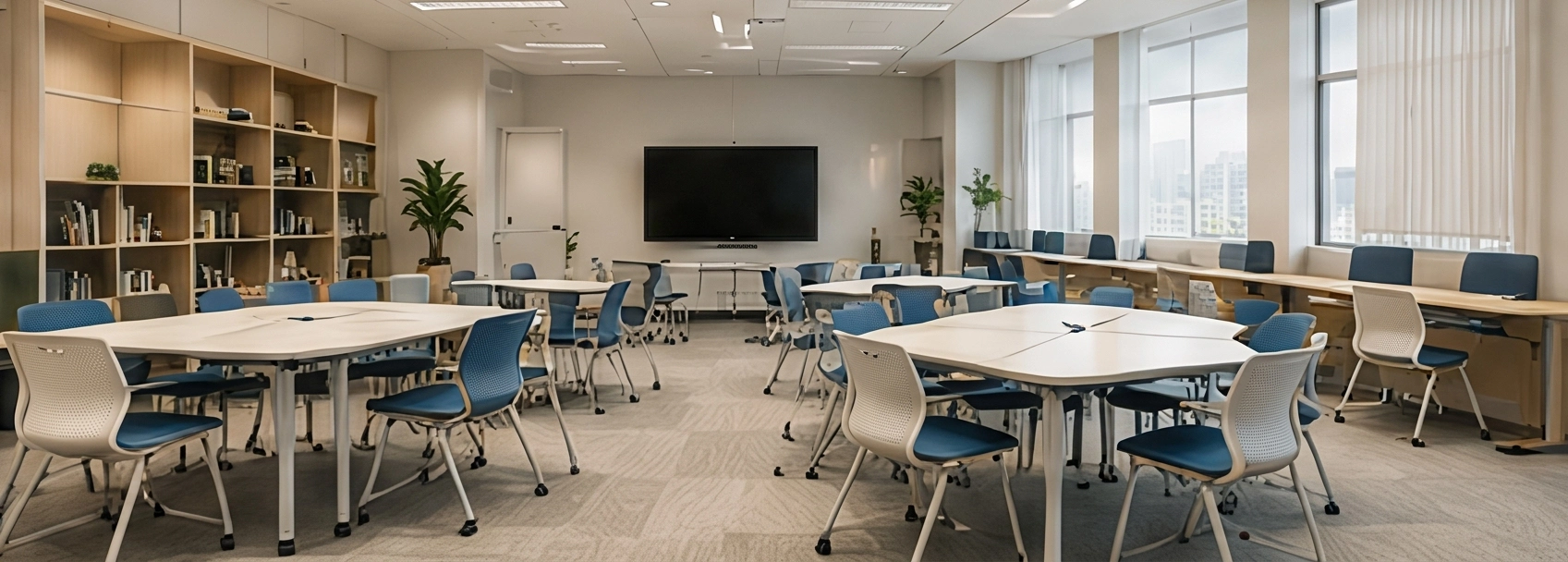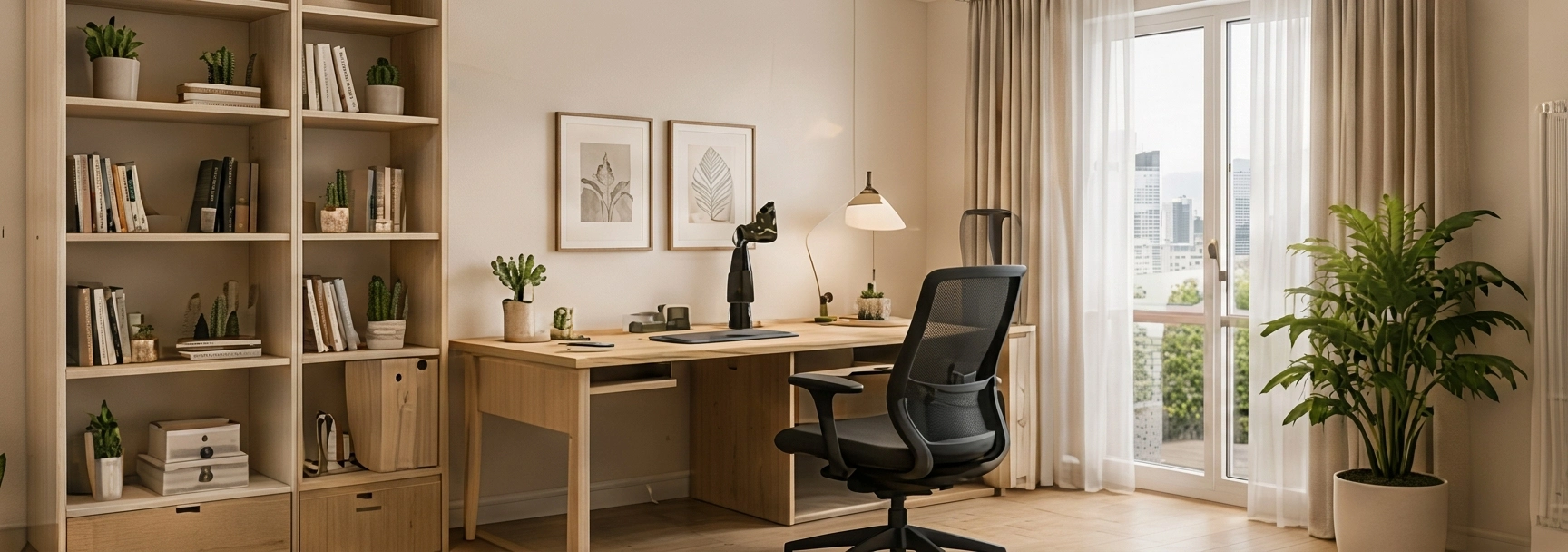
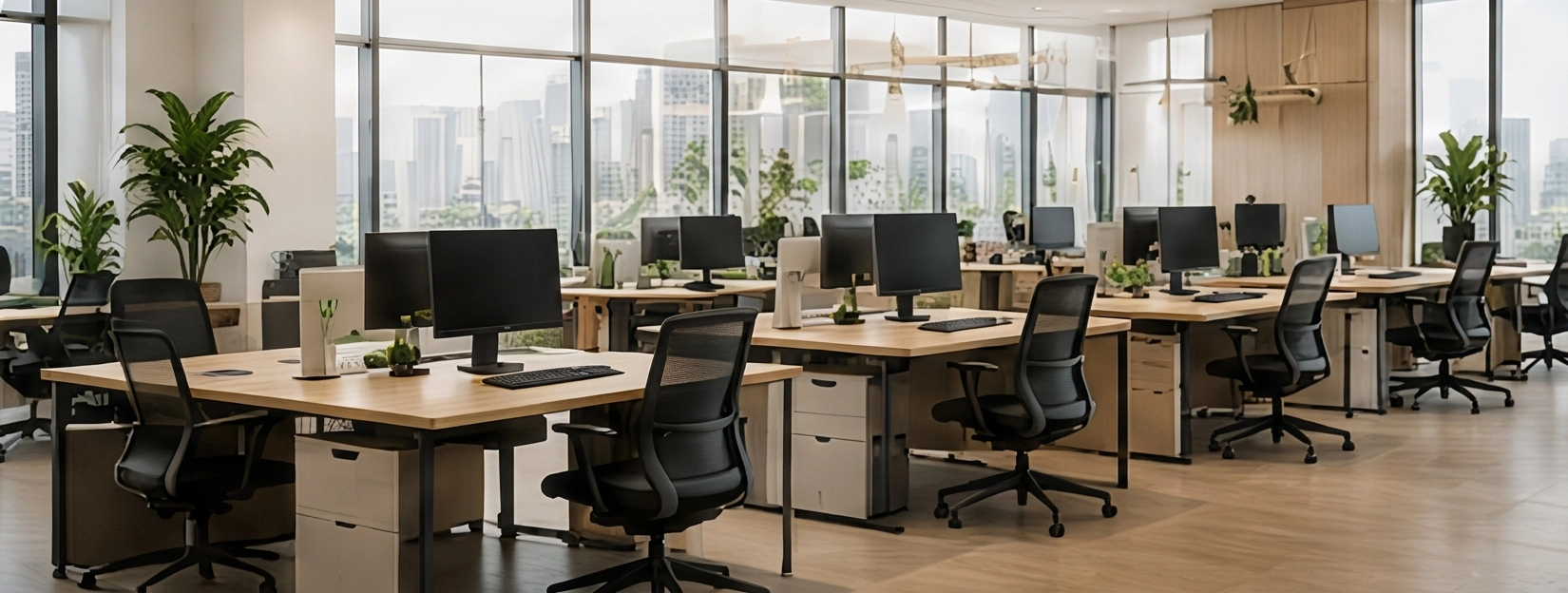
The way we work today has evolved significantly. An office is no longer simply a place where rows of desks are arranged side by side. It must now accommodate a variety of work styles and activities—from focused individual work and meetings to informal conversations and close collaboration between teams.
A well-designed workplace should begin with an understanding of how people use the space throughout the day. Some employees may require private areas for focused work, while certain teams may benefit from open spaces that encourage discussion, idea sharing, and close collaboration.
Creating a variety of spaces is therefore an effective approach to improving workplace functionality. This may include dedicated work areas, small meeting spaces, informal discussion corners, and relaxation areas. Rather than separating every activity into distinct zones, these spaces can be thoughtfully connected to create a more seamless and adaptable working environment.
Furniture selection is another important consideration. Work desks, office chairs, storage systems, and partition solutions should be carefully selected to suit both the space and the way people work. The right combination can help the office support changing needs and maintain efficient functionality over the long term.
Ultimately, a great office does not necessarily need to be large. What matters is how effectively the space is used and how well it creates an environment that supports the way people work, collaborate, and connect within the organization.