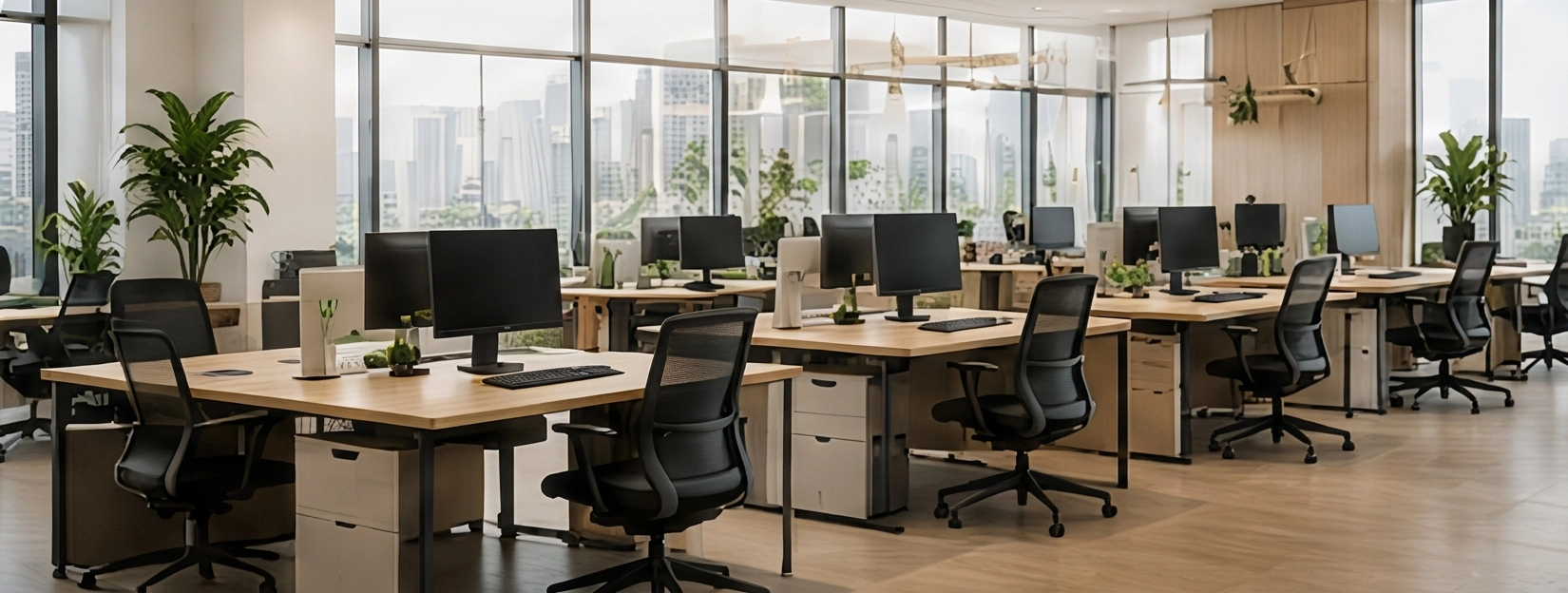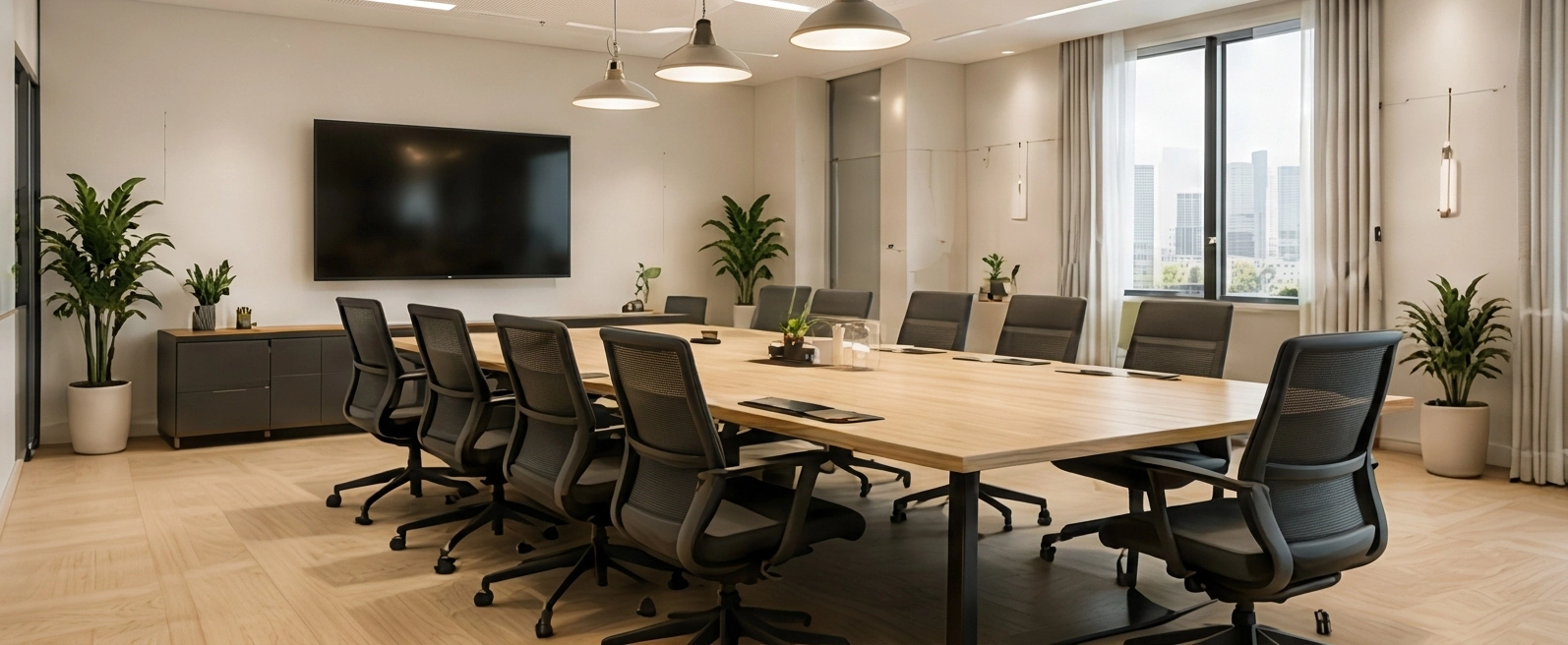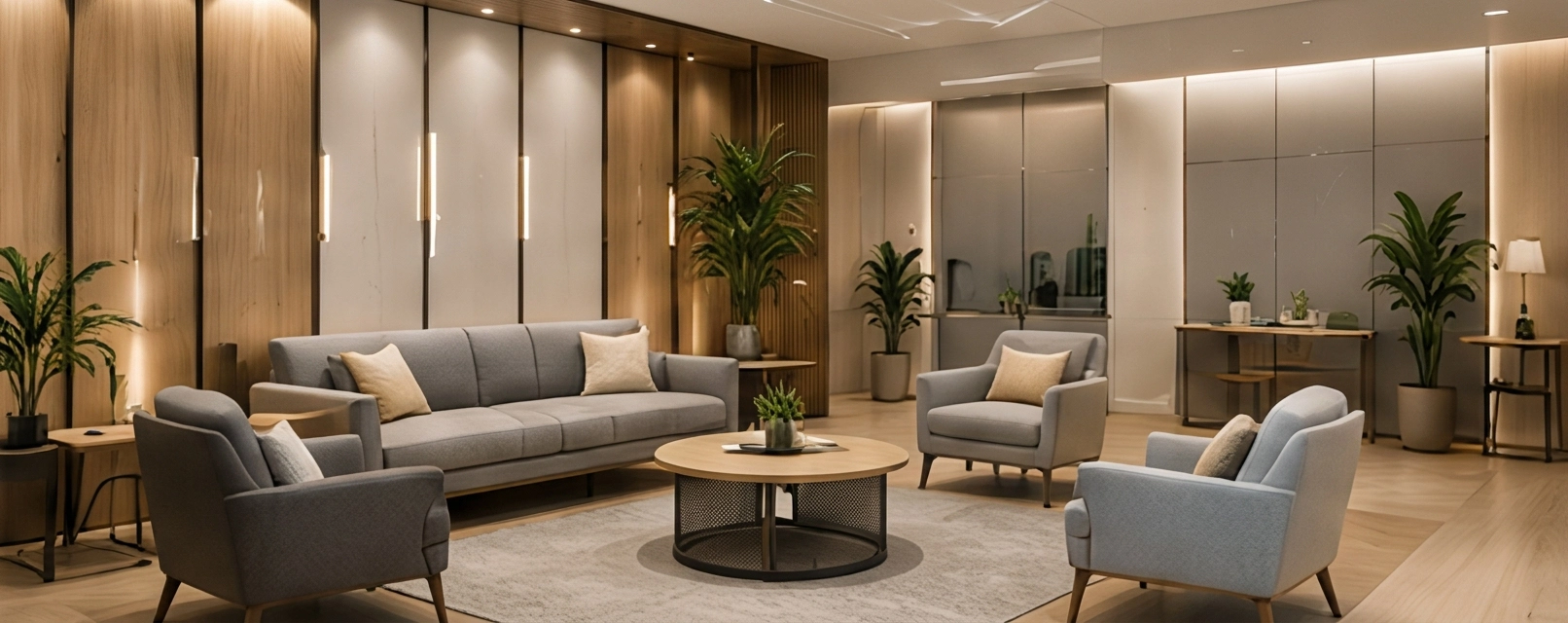
Learning today is no longer limited to sitting and listening to lectures in a traditional classroom. Learning spaces should therefore be designed to accommodate a wide range of activities, including individual learning, group work, presentations, discussions, and collaborative learning.
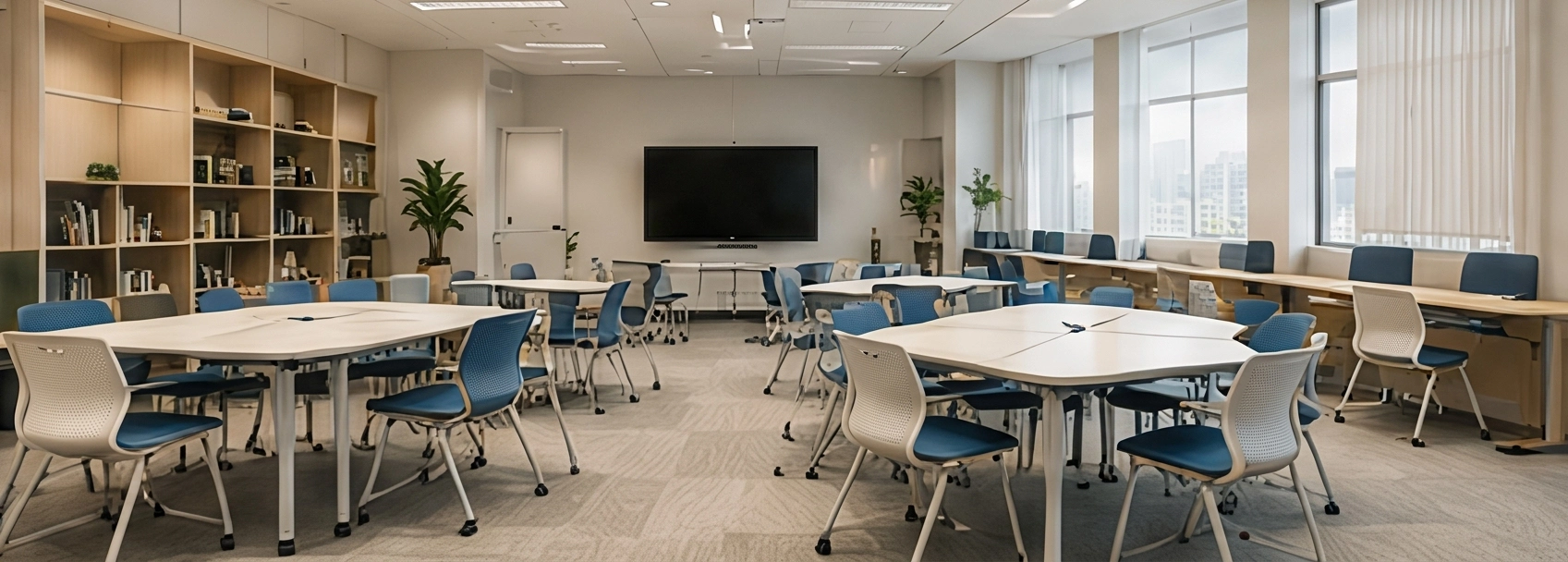
One of the key principles is flexibility. Furniture that can be easily moved or reconfigured allows a single room to support multiple activities without requiring a large amount of space.
For example, learning tables can be arranged in rows for lectures or reconfigured into groups for collaborative activities. Easily movable chairs also allow both instructors and learners to adapt the space according to the needs of each session.
It is also important to consider dedicated areas for presentations and technology, as well as storage solutions for equipment and learning materials. These elements help create a well-equipped environment that can effectively support modern learning experiences.
A well-designed learning space is therefore not simply about adding more tables and chairs. It is about creating an environment that supports learning and gives users the flexibility to transform the space according to their needs and activities.